




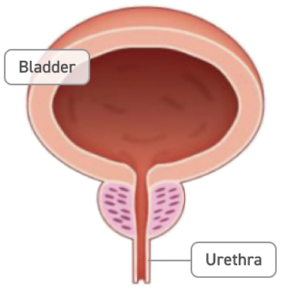
Enlarged Prostate (BPH)
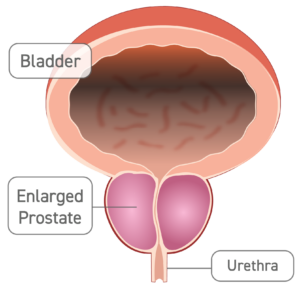
An enlarged prostate makes it difficult to urinate normally.
WHAT IS BPH?
The prostate is a gland that plays an important role in sexual function. Benign prostatic hyperplasia (BPH), or an enlarged prostate, is a prostate that has grown to be larger than normal. BPH is not prostate cancer.
As the prostate grows, it may:
-
- Constrict the urethra, making it difficult to urinate
- Apply pressure on the bladder, causing it to weaken and have difficulty emptying
Left untreated, BPH can cause significant health problems, including irreversible bladder or kidney damage, bladder stones, and incontinence.19
WHAT CAUSES BPH?
The cause of prostate enlargement is not known.
What is known is that there are two phases of growth:
- During puberty, the prostate doubles to about the size of a walnut and then stops growing
- Around age 25, the prostate continues to grow for the rest of a man’s life


Unblock your flow
Why more than 125,000 men chose Aquablation over other BPH treatments
Aquablation is not TURP. It’s not the rotorooter surgery you may have heard about.
Instead Aquablation is the only ultrasound-guided, robotic assisted therapy for enlarged prostate.
Aquablation provides significant symptom relief.1
Exceptional symptom relief
Remember what normal feels like. Aquablation therapy patients on average, experienced8:
- Relief in one procedure
- Urine flow more than doubled
- No limitations in prostate size
- Preserves function
Relief that holds
This isn’t another pill to manage symptoms.
Aquablation therapy treats the obstruction. In clinical studies, it has been shown to provide long-term relief at 5 years.8
Superior to TURP*
When compared with transurethral resection of the prostate (TURP), Aquablation therapy demonstrated8,18:
- No prostate size limitations
- Lower risk of ejaculatory dysfunction
- Superior symptom relief in prostate sizes of 50-80 grams – one of the most common size ranges among men with BPH
What you keep
In clinical studies, men who had Aquablation therapy had very low rates of complications related to bladder control (continence), erectile dysfunction, and ejaculatory dysfunction.4,5,6
Confidence in procedure
Aquablation therapy, one of the leading surgical treatments for enlarged prostate, is the only procedure that resects prostate tissue with a robotically controlled waterjet, designed to remove the growth causing the issue while protecting areas important to function.
Three steps to lasting BPH relief
“Aquablation therapy was what fixed me. I knew right away that it was working”

Aquablation success stories
Individual results may vary. These testimonials reflect personal experiences and do not represent a guarantee of specific outcomes.
Find an Aquablation Urologist in Atlanta
Physicians listed have opted into this directory and must meet minimum experience thresholds to remain listed: 5 Aquablation therapy cases to qualify for initial listing, and 10 cases within the preceding 12 months to maintain active status. Physicians are ordered by location and alphabetical by first name. PROCEPT BioRobotics makes no representations or warranties regarding the skill levels of any listed urologists or the quality of their procedural outcomes.
Reading this for someone you love?
If he’s been waking up multiple times a night you probably have been too. Many men with enlarged prostate or BPH downplay their symptoms or tell themselves it’s normal.
But it’s not.
If someone you know is dealing with sleep disruption or constant bathroom trips, you’re not alone.
You can help by sharing this page or encouraging a conversation with a urologist.
Frequently Asked Questions
Have questions? Read our most asked questions about Aquablation Therapy below.
Aquablation Therapy – The Procedure
What Is Aquablation Therapy?
Clinical Outcomes
What Is the Cost of Aquablation Therapy?
Request a Call
Sources:
- Gilling P, Barber N, Bidair M, et al. WATER: A double-blind, randomized, controlled trial of Aquablation vs TURP in BPH. J Urol. 2018;199(5):1252-1261
- Gilling P, et al. WATER Study design: first FDA pivotal study randomized to gold standard TURP. ClinicalTrials.gov NCT02505919; WATER II NCT03123250.
- Centers for Medicare & Medicaid Services (CMS). CPT 52456 coverage. AMA CPT Coding Updates 2023.
- Gilling PJ, Barber N, Bidair M, et al. Five-year outcomes for Aquablation therapy compared to TURP. Can J Urol. 2022;29(1):10960-10968.
- Bhojani N, Bidair M, Kramolowsky E, et al. Aquablation therapy in large prostates (80-150 mL): Final WATER II 5- year results. J Urol. 2023;210(1):143-153.
- Omidele O, Siegal AS, et al. Aquablation at 4-years: Real world data from the largest single-center study. Urology. 2024;194:216-220.
- Gilling PJ, et al. Procedural outcomes and recovery data. J Urol. 2020. PMID:31715174.
- Berjaoui MB, Nguyen DD, et al. WATER versus WATER II 5-year update. BJUI Compass. 2024;5(11):1023-1033.
- Bataille F, et al. Ultrasound visualization during Aquablation. J Endourol. 2020. PMID:32091909.
- Cindolo L, et al. Drug adherence and clinical outcomes for patients under pharmacological therapy for LUTS/BPH. PMC. 2015.
- Ahyai SA, et al. Meta-analysis of functional outcomes following transurethral procedures for LUTS. Eur Urol. 2010;58(3):384-397.
- Roehrborn CG, et al. Five-year results of the prospective randomized controlled prostatic urethral L.I.F.T. study. Can J Urol. 2017;24(3):8802-8813.
- Rassweiler J, et al. Complications of transurethral resection of the prostate. Eur Urol. 2006;50(5):969-980.
- Gravas S, et al. EAU Guidelines on Management of Non-Neurogenic Male LUTS. Eur Urol. 2015.
- Roehrborn CG. BPH progression and worsening of LUTS. Rev Urol. 2005. PMID:16985841.
- Osman NI, et al. Detrusor changes from chronic bladder outlet obstruction. Neurourol Urodyn. 2014. PMID:23868441.
- Bortnick EM, Simma-Chiang V, Kaplan SA. Long-term Consequences of Medical Therapy for Benign Prostatic Hyperplasia. Rev Urol. 2019;21(4):154-157.
- Oumedjbeur K, et al. Aquablation versus TURP: 5-year outcomes of the WATER randomized clinical trial for prostate volumes 50-80 mL. Can J Urol. 2023;30(5):11650-11658.
- Johns Hopkins Medicine. Benign Prostatic Hyperplasia (BPH). Johns Hopkins Medicine Health Library. https://www.hopkinsmedicine.org/health/conditions-and-diseases/benign-prostatic-hyperplasia-bph. Accessed April 10, 2026.
ML08448.B